
Opportunity Zones: 2026 Changes and Planning Opportunities for Investors AI-generated Image December 31, 2026, is more than just another date on the calendar for Opportunity Zone investors. It could be a major tax-planning milestone. Investors with existing Qualified Opportunity Fund (QOF) investments may face recognition of previously deferred gains, while investors considering new Opportunity Zone investments will encounter a significantly different set of rules beginning in 2027. The changes also introduce new incentives for qualifying rural investments, making this an important time to review both existing QOF investments and potential future opportunities. Important: Opportunity Zone rules are complex. Your tax treatment can depend on when the gain was realized, when you invested in the QOF, the type of investment, holding period, and other requirements. Always consult a qualified tax professional before making investment or tax-planning decisions. What Is an Opportunity Zone? An Opportunity Zone (QOZ) is a designated economically distressed community where eligible investors can receive certain federal tax benefits for investing through a Qualified Opportunity Fund (QOF). A QOF is an investment vehicle that invests in qualifying Opportunity Zone property and generally must meet a 90% investment standard to maintain its qualified status. The program was designed to encourage private investment in communities that could benefit from new capital, businesses, jobs, and economic development. How Did the Original Opportunity Zone Tax Benefit Work? Under the original Opportunity Zone rules, an investor with eligible gain could generally defer federal tax on that gain by investing the appropriate amount in a QOF within the applicable 180-day period. For existing investments under the original rules, deferred gain is generally recognized in the taxable year that includes December 31, 2026, unless an earlier inclusion event occurs. That does not necessarily mean the investor must sell the QOF investment in 2026. An investor may continue holding the investment and, if the requirements are satisfied, may still be eligible for the separate 10-year appreciation benefit. Why December 31, 2026 Matters If you already own a QOF investment, 2026 deserves a closer look now—not after year-end. The recognition of previously deferred gain could create a significant tax liability even if you continue holding the QOF investment. Before the end of 2026, consider reviewing: The amount of gain originally deferred The date your QOF investment was made The structure of the QOF investment Whether an inclusion event has already occurred Your expected 2026 tax liability Your available cash to fund the tax liability Your expected QOF holding period Whether you plan to retain the investment beyond 2026 How the investment fits into your estate and overall tax strategy A proactive review can give you more time to prepare for the tax bill and evaluate your options. What Changes for Opportunity Zones After 2026? The One, Big, Beautiful Bill Act (OBBBA) made significant changes to the Opportunity Zone program. The program was made permanent, and a new round of Opportunity Zone designations begins January 1, 2027, with additional designation rounds generally occurring every 10 years. For investors considering new QOF investments, the rules after 2026 are therefore different from the rules that applied to the original Opportunity Zone program. Here are the major changes to understand. 1. A New Round of Opportunity Zones Begins in 2027 The next round of QOZ designations takes effect January 1, 2027. That means investors considering a new QOF investment should not automatically assume that today’s Opportunity Zone map will remain the same. States are going through the nomination process for the new designations, and Treasury and the IRS expect to identify the designated tracts before January 1, 2027. Planning point: If you’re considering a 2027 investment, verify that the specific property or business is located in a qualifying tract under the new rules. 2. New Five-Year Basis Benefit for Investments After 2026 One of the major changes applies to amounts invested in QOFs after December 31, 2026. Under the new rules, if the qualifying investment is held for at least five years, the investor generally receives a 10% increase in basis attributable to the deferred gain. In simple terms, the new rules provide a fresh five-year timeline for the basis benefit rather than tying the benefit to the original 2026 deadline. This creates a new planning consideration for investors making QOF investments beginning in 2027. 3. A Potential 30% Benefit for Qualifying Rural Investments The new rules provide an enhanced basis benefit for certain investments in qualified rural opportunity funds. For qualifying rural investments held for at least five years, the basis increase can generally be 30% instead of 10%. This can make qualifying rural projects particularly interesting for investors evaluating long-term Opportunity Zone strategies. However, not every property outside a major city automatically qualifies. Specific statutory requirements apply to the definition of a rural area and to qualified rural opportunity funds. 4. The 10-Year Appreciation Benefit Remains Important The long-term Opportunity Zone strategy does not end with the 2026 transition. If an investor holds a qualifying QOF investment for at least 10 years and meets the applicable requirements, the investor may generally elect to adjust the basis of the QOF investment to its fair market value when the investment is sold or exchanged. This can potentially exclude federal income tax on qualifying appreciation generated after the QOF investment. Important: This benefit is separate from the tax treatment of the originally deferred gain. Investors should evaluate both pieces independently. 5. Rural Property Gets a More Favorable Improvement Rule The Opportunity Zone changes also provide a significant benefit for certain rural real estate projects. For qualifying tangible property located in a QOZ that is entirely within a rural area, the required substantial-improvement threshold was reduced from 100% to 50%, effective July 4, 2025. That means qualifying rural property may require a substantially smaller investment in improvements to satisfy the applicable substantial-improvement test. This can be particularly relevant to real estate investors, developers, and businesses evaluating renovation or redevelopment projects. The rural definition is specific. Generally, it excludes cities or towns with populations greater than 50,000 and urbanized areas contiguous and adjacent to such cities or towns. Existing QOF Investments vs. New Investments After 2026 The most important distinction for investors is when the QOF investment is made. Planning Item Existing QOF Investments New QOF Investments After Dec. 31, 2026 Deferred-gain recognition Generally tied to the taxable year including Dec. 31, 2026, unless an earlier inclusion event occurs Generally tied to the new five-year inclusion rule Five-year basis benefit Original rules apply Generally 10% Rural basis benefit

Business Valuation Tips Every First-Time Entrepreneur Should Know
Business Valuation Tips Every First-Time Entrepreneur Should Know AI-generated Image Think Your Business Is Too New for a Valuation? Think Again. When you’re launching a business, your focus is usually on winning customers, increasing revenue, and keeping operations running smoothly. But there’s one critical question many entrepreneurs overlook: What is your business actually worth? Most people associate business valuation with selling a company. In reality, knowing your business’s value helps you make smarter financial decisions from day one. Whether you’re seeking funding, applying for a loan, planning for taxes, or simply measuring growth, a business valuation provides the financial clarity you need. At Sai CPA Services, we help entrepreneurs understand their company’s true value so they can grow with confidence. What Is a Business Valuation? A business valuation determines the fair market value of your company using recognized financial methods and industry benchmarks. A professional valuation looks beyond revenue to evaluate factors such as: Revenue and profitability Cash flow Assets and liabilities Market conditions Industry performance Customer relationships Growth potential Operational risks Comparable business sales The result is an objective assessment that helps you make informed business decisions. Why Business Valuation Matters Business valuation isn’t just for business owners preparing to sell. It helps you: Secure financing Attract investors Plan for taxes Track business growth Support succession planning Reduce financial uncertainty Make strategic decisions with confidence Understanding your company’s value today helps you build a stronger business tomorrow. 10 Business Valuation Tips for First-Time Entrepreneurs 1. Keep Accurate Financial Records Reliable financial statements are the foundation of every accurate valuation. Maintain organized records such as: Income statements Balance sheets Cash flow statements Tax returns Accounts receivable and payable Payroll records Clean financial records improve credibility with lenders, investors, and valuation professionals. 2. Separate Personal and Business Finances Mixing personal and business expenses is one of the most common mistakes new entrepreneurs make. Separate accounts make it easier to: Produce accurate financial reports Simplify tax preparation Improve valuation accuracy Build investor confidence Clear financial boundaries lead to better business decisions. 3. Focus on the Drivers of Business Value Revenue is only part of the equation. Businesses earn stronger valuations when they demonstrate: Consistent profitability Positive cash flow Strong customer retention A respected brand Effective management Multiple revenue streams Scalable operations Improving these fundamentals can significantly increase your company’s value over time. 4. Choose the Right Valuation Method Every business is different, so the valuation method should match your company’s stage and goals. Income Approach Best for businesses with stable earnings and predictable cash flow. Market Approach Compares your business to similar companies that have recently sold. Asset-Based Approach Measures value by subtracting liabilities from assets and is commonly used for asset-heavy businesses. Professional valuation experts often combine multiple methods to produce the most accurate result. 5. Understand Your Industry Your company’s value is influenced by more than its financial performance. Industry trends such as market demand, competition, economic conditions, technology, and profit margins all affect valuation. Knowing where your business stands within your industry helps identify opportunities for growth. 6. Build Strong, Consistent Cash Flow Cash flow is one of the clearest indicators of a healthy business. Improve it by: Managing expenses carefully Collecting receivables faster Increasing recurring revenue Monitoring operating costs Businesses with dependable cash flow typically receive higher valuations because they present less financial risk. 7. Protect Your Valuable Business Assets Some of your most valuable assets may not appear on your balance sheet. These include: Brand reputation Trademarks Copyrights Patents Customer relationships Proprietary systems Intellectual property Protecting these assets strengthens your company’s long-term value. 8. Avoid Common Valuation Mistakes Even successful businesses can lose value because of avoidable errors. Watch out for: Poor bookkeeping Outdated financial records Ignoring liabilities Unrealistic revenue projections Dependence on a single customer Mixing personal and business expenses Professional guidance helps minimize these risks and improves valuation accuracy. 9. Update Your Valuation Regularly Your business evolves, and so does its value. Consider updating your valuation when you: Experience significant revenue growth Expand operations Add investors Change ownership Prepare for a merger or acquisition Plan taxes Prepare to sell the business Regular valuations provide valuable insights into your company’s progress. 10. Work with Experienced Valuation Professionals Online valuation calculators can provide rough estimates, but they rarely capture the complete picture. Professional valuation specialists: Analyze financial performance Apply recognized valuation methodologies Consider market conditions Prepare comprehensive reports Support tax, legal, and financing needs An accurate valuation gives you greater confidence when making important business decisions. The Long-Term Benefits of a Professional Business Valuation A professional valuation delivers more than a number—it becomes a strategic planning tool. Key Benefits Include: Better financial planning Greater credibility with lenders and investors Improved tax planning Stronger negotiating power Smarter growth decisions Succession and estate planning Reduced financial risk How Sai CPA Services Helps Entrepreneurs At Sai CPA Services, we provide business owners with the financial insights they need to make confident decisions. Our Services Include: Professional business valuation reports Financial statement analysis Tax planning support Business consulting Growth strategy guidance Succession planning Financial reporting insights We combine technical expertise with practical advice to help entrepreneurs maximize the value of their businesses. Why Choose Sai CPA Services? Business owners trust Sai CPA Services because we provide: Personalized valuation services Experienced financial professionals Industry-specific expertise Transparent reporting Accurate financial analysis Strategic business guidance Commitment to long-term client success Whether you’re seeking investment, planning for growth, or simply want to understand your company’s worth, we’re here to help. Frequently Asked Questions (FAQs) 1. What is business valuation? Business valuation is the process of determining the economic value or fair market value of a business using recognized financial methods and industry data. 2. Why should first-time entrepreneurs get a business valuation? A business valuation helps entrepreneurs understand their company’s worth, attract investors, secure financing, plan taxes, monitor growth, and make informed business decisions. 3. How often should I update my business valuation? Most businesses should update their valuation every one to three years or whenever significant

Real Estate Investing: Where Market Strategy Meets Tax Strategy
Real Estate Investing: Where Market Strategy Meets Tax Strategy AI-generated Image The Best Real Estate Investments Don’t Just Generate Returns—They Create Tax Savings Buying the right property is only part of the equation. The most successful real estate investors know that market strategy and tax strategy go hand in hand. A well-structured investment plan doesn’t just focus on appreciation—it maximizes cash flow, minimizes taxes, and builds long-term wealth. Real Estate Success Is About More Than Appreciation Many investors measure success by how much a property’s value increases. Experienced investors look at the bigger picture. They build wealth through: Consistent positive cash flow Strategic tax planning Depreciation deductions Asset protection and wealth preservation Long-term investment planning When tax planning becomes part of your investment strategy—not an afterthought—you keep more of what you earn and position yourself for sustainable growth. The Real Estate Investment Cycle: Four Steps to Smarter Investing Every successful investment follows a disciplined process. 1. Choose the Right Market A great investment often starts with the right location—not just the right property. Evaluate factors such as: Employment growth Population trends Rental demand School districts Planned infrastructure and development Strong markets generally offer better appreciation potential and more stable rental income. 2. Perform Thorough Due Diligence Before closing on a property, understand both the opportunities and the risks. Review: Property inspections Comparable sales Rental income potential Property taxes Insurance costs Maintenance and repair expenses Careful due diligence protects your investment and helps prevent costly surprises. 3. Structure the Right Financing Your financing strategy has a direct impact on profitability. Consider: Mortgage pre-approval Interest rates Loan terms Down payment requirements Expected monthly cash flow The right financing can improve liquidity, increase flexibility, and strengthen long-term returns. 4. Plan Your Exit Before You Buy Every investment should begin with a clear exit strategy. Depending on your goals, you may choose to: Hold for long-term appreciation Refinance to access equity Sell and realize capital gains Transfer assets through an estate plan Planning ahead helps reduce taxes and provides greater flexibility as market conditions change. Five Tax Strategies Every Real Estate Investor Should Know 1. Maximize Depreciation Benefits Depreciation remains one of the most valuable tax advantages available to real estate investors. It allows qualifying property owners to deduct portions of a property’s cost over time, reducing taxable income while improving cash flow. Additional opportunities may include: Cost Segregation Studies Section 179 deductions (when applicable) Accelerated depreciation on qualifying building components Keep in mind that depreciation recapture may apply when a property is sold, making proactive tax planning essential. 2. Take Advantage of a 1031 Exchange A 1031 Exchange allows investors to defer capital gains taxes by reinvesting proceeds into another qualifying investment property. To qualify, investors generally must: Identify replacement property within 45 days Complete the exchange within 180 days Use a qualified intermediary When executed properly, a 1031 Exchange helps preserve investment capital and accelerate long-term portfolio growth. 3. Consider a Delaware Statutory Trust (DST) A Delaware Statutory Trust (DST) allows investors to own fractional interests in institutional-quality real estate while maintaining eligibility for many 1031 Exchange benefits. Potential advantages include: Passive ownership Professional property management Portfolio diversification Continued tax-deferred investment opportunities For investors seeking fewer day-to-day management responsibilities, a DST may be an attractive option. 4. Explore Historic Property Tax Credits Restoring qualifying historic properties may unlock valuable federal and state tax credits. These incentives can: Offset renovation costs Increase project profitability Preserve historically significant properties Support community revitalization When available, these credits can substantially improve the financial performance of redevelopment projects. 5. Make Estate Planning Part of Your Investment Strategy Real estate often represents one of a family’s largest assets. An effective estate plan helps preserve that wealth while minimizing future tax exposure. Common strategies include: Family Limited Partnerships (FLPs) Trusts Lifetime gifting strategies Step-up in basis planning Integrating estate planning into your investment strategy can help protect your legacy for future generations. Common Mistakes Real Estate Investors Make Even experienced investors leave money on the table by overlooking tax planning opportunities. Avoid these common mistakes: Waiting until tax season to plan Missing depreciation deductions Choosing the wrong business entity Keeping incomplete financial records Delaying estate planning Avoiding these pitfalls can improve profitability and reduce unnecessary tax liabilities. Build Wealth with Market Strategy and Tax Strategy Successful real estate investing isn’t just about finding great properties—it’s about making smarter financial decisions at every stage of the investment journey. At SAI CPA Services, we help real estate investors develop customized tax strategies that improve cash flow, reduce tax liabilities, and support long-term wealth creation. Whether you’re purchasing your first investment property, expanding your portfolio, or planning your estate, our team provides the strategic guidance you need to invest with confidence. Ready to Maximize Your Real Estate Returns? Don’t wait until tax season to start planning. Schedule a consultation with SAI CPA Services today and discover how a proactive tax strategy can help you keep more of your investment income, strengthen your portfolio, and build lasting wealth. Contact Us

Protect Your Family Wealth with an Accurate Business Valuation
Protect Your Family Wealth with an Accurate Business Valuation AI-generated Image Do You Know What Your Business Is Really Worth? For many entrepreneurs, their business is their largest financial asset—often worth more than their home, investments, and retirement accounts combined. Yet surprisingly, many business owners don’t discover its true value until they’re preparing to retire, transfer ownership, settle an estate, or respond to an unexpected life event. By then, waiting can become costly. An accurate business valuation gives you more than a number. It provides the financial clarity you need to make smarter decisions, minimize tax exposure, protect your legacy, and preserve your family’s wealth for generations. At Sai CPA Services, we help business owners understand the true value of their companies so they can plan confidently for the future. What Is a Business Valuation? A business valuation is the process of determining the fair market value of a company using recognized financial methodologies. A professional valuation considers factors such as: Historical financial performance Revenue and profitability Assets and liabilities Cash flow Industry trends Market conditions Growth opportunities Operational risks Comparable business sales The result is a comprehensive valuation report that supports informed financial and strategic decisions. What Is a Business Valuation? A business valuation is the process of determining the fair market value of a company using recognized financial methodologies. A professional valuation considers factors such as: Historical financial performance Revenue and profitability Assets and liabilities Cash flow Industry trends Market conditions Growth opportunities Operational risks Comparable business sales The result is a comprehensive valuation report that supports informed financial and strategic decisions. Why Business Valuation Matters Without knowing your company’s true value, important financial decisions are based on assumptions rather than facts. A professional valuation helps you: Protect family wealth Reduce tax risks Plan for retirement Transfer ownership fairly Support estate planning Avoid family disputes Prepare for unexpected life events Make better business decisions Knowing what your business is worth provides confidence today—and security for tomorrow. 1. Build a Strong Estate Plan Estate planning becomes much easier when your largest asset has a documented value. A business valuation helps you: Determine the taxable value of your estate Allocate ownership fairly among heirs Support trusts and gifting strategies Reduce future conflicts Simplify estate administration Without an accurate valuation, families often face unnecessary tax issues and disagreements. 2. Make Business Succession Smoother Every business owner will eventually exit their business—whether by retirement, sale, or transferring ownership. An objective valuation helps ensure a fair transition when ownership moves to: Children Family members Business partners Employees Outside buyers Instead of relying on opinions or emotions, everyone works from reliable financial data. 3. Reduce Tax Risks Business valuation plays a critical role in: Estate tax reporting Gift tax planning Business transfers Ownership restructuring Capital gains calculations Accurate documentation supports compliance and helps reduce the risk of IRS challenges or costly disputes. 4. Protect Your Family During Unexpected Events Life doesn’t always go according to plan. Events such as disability, death, divorce, or shareholder disputes can create financial uncertainty almost overnight. Having a current valuation allows your family to make informed decisions quickly and supports buy-sell agreements, ownership transfers, and legal settlements with greater confidence. 5. Strengthen Retirement Planning Many entrepreneurs expect their business to fund retirement. But without knowing what the business is worth, retirement planning becomes little more than guesswork. A valuation helps estimate: Expected sale proceeds Retirement income Investment needs Long-term wealth preservation 6. Transfer Wealth with Confidence Passing a business to the next generation requires thoughtful planning. A valuation helps determine: Fair ownership percentages Gift values Tax-efficient transfer strategies Trust funding decisions The result is a smoother transfer of wealth while helping preserve family assets. 7. Prevent Costly Family Disputes Disagreements often arise when family members have different opinions about a company’s value. An independent valuation provides: Transparent calculations Objective analysis Fair market value Clear financial documentation This helps reduce misunderstandings and maintain healthy family relationships. 8. Support Better Business Decisions A business valuation isn’t only for selling your company. It also helps you make smarter decisions about: Business expansion Financing Strategic partnerships Acquisitions Restructuring Long-term planning When you understand your company’s value, you can make decisions based on facts instead of assumptions. Common Business Valuation Methods Professional valuation specialists typically use one or more of these approaches. Income Approach Values the business based on future earnings and expected cash flow. Best for: Profitable, growing businesses. Market Approach Compares your company with similar businesses that have recently sold. Best for: Businesses operating in active markets with comparable sales data. Asset-Based Approach Calculates value by subtracting liabilities from assets. Best for: Holding companies and asset-intensive businesses. When Should You Update Your Business Valuation? Consider updating your valuation whenever significant changes occur, including: Annual financial planning Estate planning Business succession Selling your company Bringing in investors Mergers or acquisitions Major revenue growth Ownership changes Divorce proceedings Tax planning Keeping your valuation current ensures you’re making decisions with accurate financial information. Why Business Owners Choose Sai CPA Services At Sai CPA Services, we combine valuation expertise with practical tax and financial planning advice. Our services include: Comprehensive business valuation reports Financial analysis Estate and succession planning support Tax planning guidance Business consulting Wealth preservation strategies We don’t simply calculate your company’s value—we help you understand what that value means for your financial future. Frequently Asked Questions (FAQs) 1. Why is business valuation important for family wealth? Business valuation determines the true value of your company, helping protect family assets through informed estate planning, succession planning, tax compliance, and wealth transfer strategies. 2. How often should a business valuation be updated? Most businesses should update their valuation every one to three years or whenever significant financial, ownership, or operational changes occur. 3. What documents are required for a business valuation? Typically, you’ll need: Financial statements Tax returns Balance sheets Profit and loss statements Asset records Business agreements Ownership information 4. Can business valuation help reduce estate taxes? A professionally prepared valuation supports accurate estate tax reporting and helps families implement tax-efficient wealth transfer strategies where applicable. 5.

Music & Money – Financial Strategies Every Musician Should Know
Music & Money – Financial Strategies Every Musician Should Know AI-generated Image Turn Your Talent Into Long-Term Wealth Writing great music is only part of building a successful career. Today’s musicians are also business owners, content creators, marketers, and entrepreneurs. Whether your income comes from streaming, live performances, licensing, merchandise, sponsorships, or online content, your financial decisions can have just as much impact on your future as your next hit song. The artists who build lasting wealth aren’t always the ones earning the most—they’re the ones who manage their money strategically. At SAI CPA Services, we help musicians, producers, songwriters, and creative professionals reduce taxes, protect their income, and build wealth that lasts long after the spotlight fades. The Modern Music Business Success in today’s music industry means thinking beyond the stage. Your music is a business, and every successful business needs a financial strategy. 1. Build a Brand That Generates Multiple Income Streams Depending on one source of income can be risky. The strongest music careers create revenue from multiple channels, including: Live performances and touring Music streaming Merchandise sales Brand sponsorships YouTube and social media Membership communities Music lessons or coaching Licensing music for film, television, and advertising The more diversified your income, the more stable your career becomes. 2. Protect Your Most Valuable Asset—Your Music Your songs can continue generating income for decades—but only if they’re properly protected. Understanding your intellectual property helps ensure you receive every dollar you’ve earned. Key areas include: Copyright registration Publishing rights Master recording ownership Licensing agreements Trademark protection Royalty collection Protecting your intellectual property protects your future income. 3. Build a Strong Financial Foundation Creative freedom becomes much easier when your finances are organized. Strong financial habits include: Separating personal and business finances Maintaining accurate bookkeeping Tracking every income source Recording deductible expenses Planning for quarterly estimated taxes Building an emergency fund Working with experienced tax professionals Good financial systems reduce stress and give you more time to create. 4. Build Wealth Beyond Music Your performing career may evolve over time, but your wealth should continue growing. Many successful musicians invest in: Real estate Retirement accounts Diversified investment portfolios Private businesses Commercial property Other long-term investments A smart investment strategy creates financial security beyond your performing years. Five Financial Strategies Every Musician Should Know 1. Choose the Right Business Structure The right business entity can provide tax advantages, legal protection, and greater credibility. Common options include: Sole Proprietorship Limited Liability Company (LLC) S Corporation Choosing the right structure can simplify bookkeeping, protect personal assets, and support future growth. 2. Maximize Every Tax Deduction Many musicians pay more taxes than necessary simply because they overlook legitimate business expenses. Common deductions may include: Musical instruments Studio rental and recording costs Equipment purchases Business travel Marketing and advertising Website development Photography and branding Legal services Accounting and tax preparation Professional education Accurate recordkeeping helps ensure you don’t leave money on the table. 3. Plan for Retirement Early Irregular income makes retirement planning even more important. Depending on your situation, you may benefit from: Solo 401(k) SEP IRA Defined Benefit Plan Roth IRA (when eligible) Taxable investment accounts The earlier you start investing, the more time your money has to grow. 4. Understand Your Royalty Income Royalties can become one of your most valuable long-term assets. Knowing how each royalty stream works helps you maximize lifetime earnings. Important income sources include: Streaming royalties Performance royalties Mechanical royalties Publishing income Synchronization (sync) licensing Neighboring rights Understanding your royalty income means getting paid what your work is worth. 5. Protect Your Legacy Your music can continue creating income long after it’s written. A comprehensive estate plan helps protect both your family and your creative legacy. It may include: Trust planning Business succession planning Copyright transfers Publishing rights management Family wealth planning Charitable giving strategies Estate planning ensures your life’s work continues benefiting the people you care about most. Common Financial Mistakes Musicians Should Avoid Even talented artists can face financial setbacks because of avoidable mistakes. Watch out for these common pitfalls: Mixing personal and business finances Failing to plan for taxes Poor bookkeeping Missing valuable deductions Signing unfavorable contracts Ignoring royalty audits Delaying retirement investing Lack of investment diversification Not having an estate plan Avoiding these mistakes can save you thousands of dollars and strengthen your long-term financial future. Your Music Is Your Business—Treat It Like One Your creativity builds your career. Smart financial planning protects it. Whether you’re an independent artist, producer, songwriter, performer, or music entrepreneur, having the right financial strategy can help you: Reduce taxes Increase cash flow Protect your intellectual property Build long-term wealth Create a lasting financial legacy The most successful musicians don’t wait until tax season to think about their finances—they make informed decisions throughout the year. Partner with SAI CPA Services At SAI CPA Services, we specialize in helping musicians and creative professionals navigate the financial side of the music business. From tax planning and bookkeeping to business advisory and wealth planning, we provide personalized strategies designed to help you keep more of what you earn and build lasting financial security. Ready to take control of your financial future? Schedule a consultation with SAI CPA Services today and discover how proactive tax planning and financial strategy can help you protect your income, grow your wealth, and build a legacy that lasts far beyond your music career. Contact Us
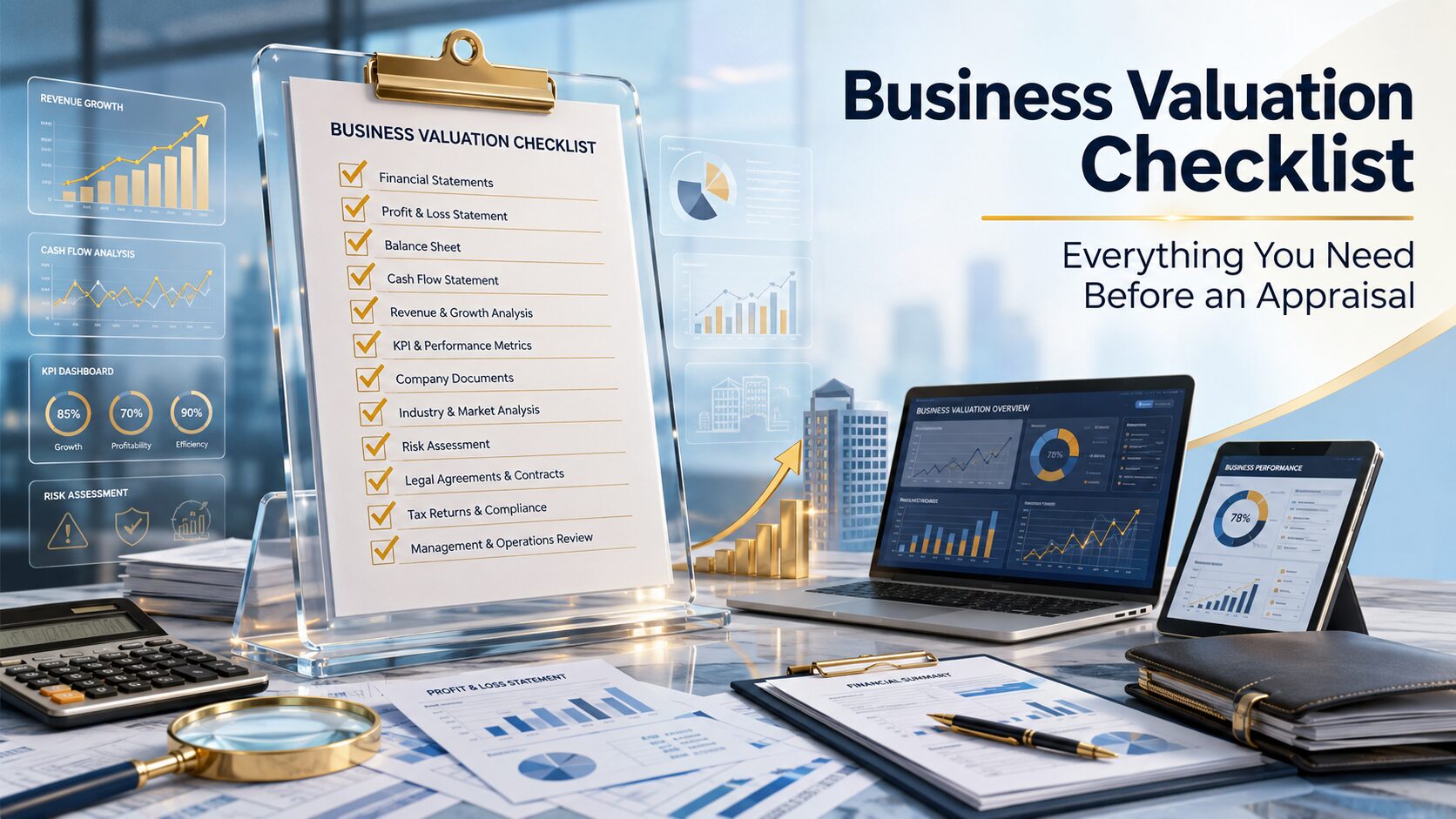
Business Valuation Checklist: Everything You Need Before an Appraisal
Business Valuation Checklist: Everything You Need Before an Appraisal AI-generated Image Is Your Business Ready for an Accurate Valuation? Whether you’re planning to sell your business, attract investors, secure financing, bring in a partner, or prepare for estate and tax planning, knowing what your business is truly worth is essential. But here’s what many business owners don’t realize: a business valuation is only as accurate as the information behind it. Missing financial records, outdated reports, or incomplete documentation can delay the process—and even impact the final valuation. At Sai CPA Services, we help business owners prepare accurate, defensible business valuations backed by reliable financial data, industry expertise, and proven valuation methodologies. Use this comprehensive checklist to gather everything you’ll need before your appraisal. Why Preparation Matters A professional valuation goes far beyond revenue and profit. Appraisers evaluate your company’s financial performance, operational strength, market position, growth potential, and risk factors. Preparing your records in advance helps you: Improve valuation accuracy Reduce delays during the appraisal process Build confidence with lenders and investors Support financing and SBA loan applications Prepare for mergers, acquisitions, or partner buyouts Simplify tax and estate planning Answer buyer and attorney questions more efficiently The more organized your records are, the more reliable your valuation will be. Business Valuation Checklist Use this checklist to ensure you’re fully prepared before the valuation begins. 1. Financial Statements (Last 3–5 Years) These reports form the foundation of every valuation. Gather: Balance Sheets Income Statements Cash Flow Statements Statements of Owner’s Equity These documents help establish profitability, cash flow, and long-term financial performance. 2. Tax Returns Collect copies of: Business tax returns Personal tax returns (if requested) Sales tax filings (when applicable) Tax returns help verify reported income and support the accuracy of your financial statements. 3. Current Financial Reports If your fiscal year hasn’t ended, include: Current Profit & Loss Statement Updated Balance Sheet Cash Flow Report Current financial data provides appraisers with the latest picture of your business. 4. Accounts Receivable & Accounts Payable Prepare aging reports that include: Accounts Receivable Outstanding invoices Collection history Bad debts Accounts Payable Vendor balances Outstanding obligations Payment schedules These reports demonstrate the health of your working capital. 5. Business Assets Create a complete inventory of both tangible and intangible assets. Tangible Assets Equipment Machinery Furniture Vehicles Computers Inventory Real estate Intangible Assets Trademarks Patents Copyrights Proprietary software Customer database Licensing agreements Brand reputation Many businesses underestimate the value of their intangible assets, even though they can significantly increase overall business value. 6. Business Liabilities Document all outstanding obligations, including: Bank loans Lines of credit Equipment financing Credit card balances Lease obligations Pending legal liabilities A valuation considers both what your business owns and what it owes. 7. Ownership & Organizational Structure Provide: Ownership percentages Shareholder agreements Partnership agreements Operating agreements Organizational chart This information helps determine ownership interests and potential valuation adjustments. 8. Customer Information Include: Major customers Customer concentration Retention rates Long-term contracts Recurring revenue A diversified and loyal customer base often strengthens business value. 9. Vendor & Supplier Agreements Gather: Long-term supplier contracts Preferred pricing agreements Exclusive distribution agreements Reliable supplier relationships reduce operational risk. 10. Employee & Management Information Prepare: Organizational chart Key employee list Employment agreements Compensation plans Benefits information Leadership team details Strong management is an important driver of business value. 11. Industry & Market Information Support your valuation with: Industry reports Competitor analysis Market trends Growth opportunities Competitive advantages Context matters. Your company is evaluated against others in the marketplace. 12. Business Plan Your business plan should outline: Growth strategy Revenue projections Expansion plans New products or services Market positioning Future growth potential plays a major role in valuation. 13. Legal Documents Collect copies of: Business licenses Articles of Incorporation Operating agreements Intellectual property registrations Insurance policies Major contracts These documents verify legal ownership and operational compliance. 14. Inventory Records If inventory is significant, include: Current inventory listing Valuation method Obsolete inventory Inventory turnover reports Inventory quality can directly impact business value. 15. Real Estate Information If your business owns property, provide: Property appraisals Mortgage information Lease agreements Property tax records Commercial real estate can represent a substantial portion of a company’s value. 16. Equipment & Fixed Assets Include a schedule showing: Purchase dates Original cost Depreciation Current condition Remaining useful life This information helps determine fair market value. 17. Previous Valuation Reports If available, include: Prior business valuations Appraisal reports Purchase price allocations Historical valuations provide valuable benchmarking information. 18. Insurance Coverage Document your current coverage, including: General liability Professional liability Workers’ compensation Property insurance Business interruption insurance Adequate insurance reduces business risk. 19. Pending Legal Matters Disclose any: Ongoing lawsuits Tax disputes Regulatory investigations Contract disputes Transparency builds credibility and prevents surprises during the valuation process. 20. Financial Forecasts Prepare projections for the next three to five years, including: Revenue forecasts Expense projections Profit estimates Capital investments Hiring plans Future earnings are one of the most important drivers of business value. Common Mistakes That Can Lower Your Business Value Even successful businesses can receive lower valuations because of avoidable issues. Watch out for: Incomplete financial records Mixing personal and business expenses Poor bookkeeping Missing tax documentation Outdated financial statements Inconsistent revenue reporting Unsupported asset values Undisclosed liabilities Keeping your financial records organized throughout the year makes the valuation process faster, smoother, and more accurate. When Do You Need a Business Valuation? A professional valuation is valuable if you’re: Selling your business Buying a business Applying for financing Planning a merger or acquisition Bringing in or buying out a partner Preparing for succession planning Completing estate or gift tax planning Resolving shareholder disputes Developing a long-term growth strategy Why Choose Sai CPA Services? Every business is different, and so is every valuation. Our experienced professionals provide: Comprehensive financial analysis Industry benchmarking Asset and liability review Income and market-based valuation methods Detailed valuation reports Tax and compliance guidance Strategic recommendations to increase business value Whether you’re preparing for a sale, financing, succession planning, or tax compliance, we’ll help you understand your company’s true value with confidence. Ready to Find Out What Your Business Is Worth? A business valuation is more than a number—it’s a powerful planning tool that helps you make smarter financial decisions. By preparing the documents in this checklist, you’ll streamline the appraisal process, improve

Accounting & Bookkeeping Services: Build a Strong Financial Foundation for Your Business
Accounting & Bookkeeping Services: Build a Strong Financial Foundation for Your Business AI-generated Image Are Your Financial Records Helping Your Business Grow—or Holding It Back? Many business owners focus on generating sales but overlook the importance of maintaining accurate financial records. Poor bookkeeping can lead to cash flow issues, missed tax deductions, compliance risks, and decisions based on incomplete or inaccurate information. Accounting and bookkeeping are more than just recording transactions. They provide the financial clarity you need to manage expenses, monitor profitability, plan for growth, and make informed business decisions. Whether you’re a startup, small business, or established company, maintaining organized financial records is essential for long-term success. What Are Accounting & Bookkeeping Services? Bookkeeping is the process of recording, organizing, and maintaining your business’s daily financial transactions. Accounting goes a step further by interpreting financial data, preparing reports, ensuring compliance, and helping business owners make strategic financial decisions. A comprehensive accounting and bookkeeping process typically includes: Recording daily financial transactions Managing accounts payable and receivable Bank and credit card reconciliations Payroll recording and reporting Financial statement preparation General ledger maintenance Expense tracking Cash flow monitoring Month-end and year-end closing Financial reporting and analysis The goal: Maintain accurate financial records that support better business decisions, regulatory compliance, and sustainable growth. Why Professional Accounting & Bookkeeping Matter Many business owners attempt to manage their books themselves, especially during the early stages of their business. As the business grows, financial transactions become more complex, increasing the likelihood of errors that can impact profitability, tax reporting, and compliance. Professional accounting and bookkeeping services can help you: Maintain accurate financial records Improve cash flow visibility Reduce costly bookkeeping errors Stay compliant with financial regulations Prepare for tax season with confidence Make informed business decisions Save valuable time for business growth Your financial records are more than numbers—they’re the foundation of every important business decision. Why Accurate Financial Records Matter Reliable bookkeeping provides a clear picture of your company’s financial health. Accurate records help business owners: Monitor revenue and expenses Track profitability Manage operating costs Identify financial trends Prepare accurate tax returns Support loan and financing applications Meet regulatory requirements Without organized financial records, even profitable businesses can face unnecessary financial challenges. Common Bookkeeping Mistakes That Cost Businesses Money 1. Mixing Personal and Business Expenses One of the most common bookkeeping mistakes is combining personal and business transactions. This can: Create inaccurate financial reports Complicate tax preparation Increase audit risk Make expense tracking difficult Maintaining separate business accounts helps keep records clean and organized. 2. Falling Behind on Bookkeeping Waiting until tax season to organize financial records often leads to missing transactions, incomplete reports, and unnecessary stress. Delayed bookkeeping can result in: Missed deductions Cash flow surprises Inaccurate financial statements Poor budgeting decisions Consistent bookkeeping provides timely financial insights throughout the year. 3. Poor Expense Tracking Many businesses lose valuable deductions simply because expenses are not properly documented. Commonly overlooked expenses include: Office supplies Business travel Professional subscriptions Equipment purchases Marketing expenses Vehicle expenses Software subscriptions Keeping organized records helps maximize deductible business expenses. 4. Ignoring Bank Reconciliations Failing to reconcile bank accounts regularly may cause: Duplicate transactions Missing deposits Undetected fraud Cash flow inaccuracies Financial reporting errors Monthly reconciliations help ensure financial records remain accurate. Essential Financial Documents Every Business Should Maintain Keeping financial records organized throughout the year simplifies bookkeeping, tax preparation, and business planning. Important records include: Income Documents Sales invoices Customer payments Deposit records Merchant processing reports Expense Documents Vendor invoices Business receipts Utility bills Rent payments Insurance records Banking Documents Bank statements Credit card statements Loan statements Payroll Records Employee payroll reports Payroll tax filings Benefits records Financial Reports Profit and Loss Statement Balance Sheet Cash Flow Statement General Ledger Trial Balance Well-maintained records provide confidence in every financial decision. How Accounting Helps Improve Business Performance Accounting is not just about recording history—it helps shape the future of your business. Professional accounting services may help you: Improve profitability Monitor cash flow Reduce unnecessary expenses Evaluate business performance Plan for expansion Prepare realistic budgets Support financing opportunities Make data-driven decisions Financial insights enable smarter business strategies. Bookkeeping vs. Accounting: What’s the Difference? Bookkeeping Bookkeeping focuses on recording financial activity. Typical bookkeeping services include: Recording transactions Managing invoices Reconciling bank accounts Tracking expenses Maintaining financial records Accounting Accounting analyzes financial information to support business planning. Accounting services often include: Financial reporting Budgeting Cash flow analysis Tax-ready financial statements Financial forecasting Business advisory services Both bookkeeping and accounting work together to keep your business financially healthy. Struggling With Cash Flow? Many profitable businesses experience cash flow problems—not because they lack revenue, but because they lack visibility into their finances. Proper bookkeeping helps you: Monitor incoming payments Track outstanding invoices Manage upcoming expenses Forecast future cash needs Improve working capital Better financial visibility leads to stronger financial stability. Real-World Example: Turning Financial Chaos into Clarity The Situation A growing service-based business had inconsistent bookkeeping practices and struggled to understand its monthly profitability. The Opportunity After implementing professional bookkeeping procedures, financial records were organized, expenses were properly categorized, and monthly reports became accurate and consistent. The Outcome The business gained better visibility into cash flow, identified unnecessary expenses, improved budgeting, and made more confident financial decisions. The Takeaway Accurate bookkeeping doesn’t just keep your records organized—it provides valuable insights that support smarter business growth. Why Monthly Bookkeeping Matters Many businesses only review their finances during tax season. Regular monthly bookkeeping provides ongoing financial visibility. Monthly bookkeeping can help you: Monitor financial performance Identify issues before they become major problems Stay prepared for tax season Improve budgeting Support business growth Maintain accurate financial reports Consistent bookkeeping leads to better financial control. Why Clients Choose Sai CPA Services At Sai CPA Services, we provide reliable accounting and bookkeeping solutions designed to support growing businesses. Our services include: Daily bookkeeping Monthly bookkeeping Financial statement preparation Bank and credit card reconciliations Accounts payable management Accounts receivable management Payroll support QuickBooks support Cash flow reporting Year-end financial preparation Management reporting What Sets Us Apart? We help businesses: ✔ Maintain accurate financial records ✔ Improve financial visibility ✔ Stay organized year-round ✔ Prepare for tax season with confidence ✔ Make informed business decisions ✔ Save time and focus on growth Our personalized approach combines accounting expertise with proactive financial guidance

Your Tax. Your Wealth. Your Legacy.
Your Tax. Your Wealth. Your Legacy. How Smart Planning Builds Financial Freedom for Generations AI-generated Image You Worked Hard to Build Wealth. Is Your Plan Designed to Protect It? Building wealth takes years of hard work, risk, and smart decisions. But many successful business owners and investors discover that earning money is only part of the equation. Without a coordinated strategy, taxes, poor planning, and unexpected transitions can slowly erode what you’ve built. The families that create lasting wealth focus on three critical areas: Your Tax — Keep more of what you earn. Your Wealth — Protect and grow your assets. Your Legacy — Transfer your success to future generations. At Sai CPA Services, we help clients connect these three areas into one integrated financial strategy. Why Traditional Planning Often Falls Short Most financial planning focuses on investments, retirement accounts, and annual tax returns. True wealth planning goes much further. A Comprehensive Strategy Addresses: Tax efficiency Asset protection Retirement planning Business growth Estate planning Wealth transfer Succession planning The objective is simple: Build wealth today while protecting opportunities for tomorrow. YOUR TAX Strategic Tax Planning Creates Opportunity Tax planning is not something that happens in April. The most successful entrepreneurs make tax decisions throughout the year because every major financial decision has tax consequences. Effective planning can help you: Reduce unnecessary taxes Increase after-tax wealth Prepare for major transactions Preserve business value Improve long-term cash flow Several advanced strategies may benefit qualified individuals and business owners. Qualified Small Business Stock (QSBS) Turning Business Growth Into Tax Savings Many founders spend decades building successful companies only to lose a significant portion of the sale proceeds to taxes. Under IRC Section 1202, qualifying shareholders may exclude eligible gains from federal taxation if specific requirements are met. Common Requirements Include: C corporation structure Original issuance shares Asset limitations Required holding periods Example A founder sells qualifying shares and realizes a $9.5 million gain. Without planning, taxes may exceed $2 million. With proper QSBS planning, eligible shareholders may significantly reduce tax exposure and preserve substantially more wealth. The lesson: Tax planning must begin before the transaction—not after. Real Estate & Investment Planning Strategies Delaware Statutory Trusts (DST) Many real estate investors eventually want to reduce management responsibilities while maintaining investment exposure. A DST may allow qualified investors to complete a 1031 exchange while transitioning from active ownership to passive investment. Potential advantages include: Tax deferral opportunities Passive ownership Portfolio diversification Estate planning flexibility Private Placement Life Insurance (PPLI) PPLI is often used by high-net-worth investors seeking long-term wealth preservation. Potential benefits include: Tax-efficient growth Estate planning advantages Asset protection opportunities Efficient wealth transfer Captive Insurance Captive insurance allows qualifying businesses to create customized risk management solutions. Potential benefits may include: Improved risk management Customized coverage Cash flow planning Asset protection opportunities Opportunity Zone Investments Opportunity Zones provide investors with opportunities to participate in economic development projects while potentially receiving tax advantages. Possible benefits include: Capital gain deferral Tax reduction opportunities Long-term growth potential Timing matters. Early planning creates more options. YOUR WEALTH Turning Tax Savings Into Long-Term Financial Security Reducing taxes is only the beginning. Lasting wealth requires a plan that protects assets, prepares for retirement, and supports future financial goals. Trusts & Estate Planning A properly structured estate plan helps ensure your wealth is transferred according to your wishes. Trust planning may provide: Asset protection Probate avoidance Family wealth transfer Multigenerational planning Common Structures Include: Irrevocable Trusts Dynasty Trusts Asset Protection Trusts The right strategy can give families greater clarity, control, and confidence. Retirement Planning for Business Owners Business owners often have unique opportunities to build wealth while creating tax advantages. Popular Strategies Include: 401(k) plans Profit-sharing plans Defined benefit plans Cash balance plans Potential Benefits Include: Current tax deductions Tax-deferred growth Increased retirement savings Long-term financial security Protecting Family Wealth Creating wealth is important. Protecting it is essential. Successful families focus on: Risk management Asset protection Financial education Family governance Preparing future generations A strong wealth strategy helps ensure the next generation is ready to manage and preserve what has been built. YOUR LEGACY Turning Business Success Into Generational Wealth For many entrepreneurs, their business is their largest asset. Yet many owners spend years building their company and very little time preparing for its eventual transition. A complete legacy strategy includes: Exit planning Succession planning Business valuation Wealth transfer Leadership transition Exit & Succession Planning Every business owner eventually faces a transition. That transition may occur through: Retirement Family succession Management buyouts Mergers Acquisitions Private equity transactions An effective exit strategy helps owners: Maximize business value Prepare future leadership Reduce transition risk Protect family wealth Every owner should answer two important questions: Who will own the business? Who will lead the business? Business Valuation & Virtual CFO Services Understanding your company’s value is critical before any transition. A professional valuation can identify: Current business value Growth opportunities Financial risks Operational strengths Exit readiness Virtual CFO services can further improve: Profitability Cash flow Financial reporting Forecasting KPI monitoring Strategic decision-making Companies with strong financial systems are often better positioned for growth, financing, and successful exits. Why Business Owners Choose Sai CPA Services We help clients connect: ✔ Strategic tax planning ✔ Wealth preservation ✔ Business growth ✔ Succession planning ✔ Legacy goals Our Services Include: Strategic tax planning Wealth planning support Business valuation Exit and succession planning Virtual CFO services Financial consulting Our goal is simple: Help clients keep more, grow more, and transfer more. Frequently Asked Questions What is the difference between tax preparation and tax planning? Tax preparation reports past financial activity. Tax planning focuses on creating strategies that improve future financial outcomes. Who benefits from QSBS planning? Entrepreneurs, founders, and investors of qualifying companies may benefit from QSBS planning when preparing for a future business sale. Why are trusts important? Trusts can help protect assets, avoid probate, and support efficient wealth transfer. When should exit planning begin? Ideally, business owners should begin planning several years before a transition to maximize value and reduce risks. How does a Virtual CFO help

Tax Preparation: File With Confidence and Keep More of What You Earn
Tax Preparation: File With Confidence and Keep More of What You Earn AI-generated Image Are You Paying More Taxes Than Necessary? Every year, taxpayers leave money on the table because they miss deductions, overlook tax credits, or make avoidable filing mistakes. Tax preparation isn’t just about completing forms before a deadline. It’s about making informed financial decisions, staying compliant with IRS requirements, and taking advantage of every legitimate tax-saving opportunity available to you. Whether you’re an individual taxpayer, entrepreneur, or business owner, a well-prepared return can help you reduce risk, avoid costly errors, and improve your overall financial position. What Is Tax Preparation? Tax preparation is the process of gathering financial information, calculating tax obligations, identifying deductions and credits, and filing accurate returns with federal and state tax authorities. A complete tax preparation process typically includes: Reviewing income documents Organizing deductible expenses Identifying available tax credits Preparing federal and state tax returns Evaluating tax-saving opportunities Ensuring IRS compliance The goal: File an accurate return while legally minimizing your tax liability. Why Professional Tax Preparation Matters Many people assume tax filing is simply entering numbers into software. In reality, tax laws change regularly, and even small mistakes can lead to missed savings, IRS notices, penalties, or unnecessary tax payments. Professional tax preparation can help you: Reduce filing errors Identify overlooked deductions Stay compliant with tax laws Avoid penalties and interest Improve year-round tax planning Make smarter financial decisions Your tax return isn’t just a form—it’s a snapshot of your financial health. What Does the IRS Expect? The IRS expects taxpayers to accurately report income, deductions, and credits while maintaining supporting documentation. Key responsibilities include: Reporting all taxable income Keeping accurate records Supporting deductions and credits Filing on time Paying taxes when due The IRS uses automated systems and review processes to identify discrepancies. Proper documentation can help prevent unnecessary complications. Common Tax Filing Mistakes That Cost Taxpayers Money 1. Missing Valuable Deductions One of the most common filing mistakes is failing to claim deductions you qualify for. Examples may include: Business expenses Retirement contributions Education-related expenses Charitable donations Home office expenses Certain healthcare costs Missing eligible deductions can result in paying more tax than necessary. 2. Reporting Income Incorrectly The IRS receives copies of many tax documents directly from employers, financial institutions, and clients. Common reporting mistakes include: Forgetting freelance or contract income Omitting investment earnings Misreporting business revenue Overlooking income reported on tax forms Documents frequently involved include: W-2 forms 1099 forms Investment income statements Even unintentional reporting errors can trigger IRS notices. 3. Poor Recordkeeping Good records are the foundation of an accurate tax return. Important documents include: Receipts Invoices Bank statements Business expense records Investment statements Mileage logs Well-organized records make filing easier and provide support if questions arise later. Documents You’ll Need Before Tax Season Getting organized early can make tax season significantly less stressful. Personal Tax Documents W-2 forms 1099 forms Mortgage interest statements Student loan interest statements Retirement account statements Prior-year tax returns Business Tax Documents Income records Expense reports Payroll records Mileage logs Financial statements Prior-year tax returns The more organized your documentation, the easier it is to identify tax-saving opportunities. How Tax Preparation Can Reduce Your Tax Liability Tax preparation isn’t only about calculating what you owe. It’s also about uncovering opportunities to legally reduce your tax burden. Potential strategies may include: Maximizing retirement contributions Reviewing business deductions Planning estimated tax payments Choosing the most advantageous business structure Evaluating available tax credits Strategically timing income and expenses The earlier planning begins, the more options you may have. Individual vs. Business Tax Preparation Individual Tax Preparation Individuals often need assistance with: Federal tax returns State tax returns Investment income reporting Retirement income Tax credits Itemized deductions Business Tax Preparation Business owners face additional complexities, including: Business income reporting Expense classification Payroll tax compliance Estimated tax payments Entity-specific filings Proper planning helps businesses avoid penalties while maximizing available deductions. Received an IRS Notice? Don’t Panic. Receiving an IRS notice doesn’t automatically mean you’ve done something wrong. Common Notices May Involve: Missing information Return corrections Payment reminders Verification requests Requests for additional documentation The key is responding promptly and appropriately. Ignoring IRS correspondence can make a manageable issue much more complicated. Real-World Example: Finding Thousands in Missed Deductions The Situation A small business owner filed a return using basic tax software and believed everything was complete. The Opportunity After a professional review, several legitimate business expenses had not been claimed. The Outcome By identifying overlooked deductions and properly categorizing expenses, the business reduced taxable income and improved its overall tax position. The Takeaway Accurate tax preparation isn’t just about avoiding mistakes—it’s about uncovering opportunities. Why Year-Round Tax Planning Matters Many taxpayers think about taxes only during filing season. The most successful tax strategies, however, happen throughout the year. Regular Reviews Can Help You: Prepare for future tax obligations Adjust estimated tax payments Identify savings opportunities early Make informed financial decisions Avoid surprises at filing time Tax planning works best when it’s proactive—not reactive. Why Clients Choose Sai CPA Services At Sai CPA Services, we help individuals and businesses navigate tax requirements with confidence. Our Services Include: Individual tax preparation Business tax preparation IRS compliance support Tax planning strategies Deduction and credit analysis Multi-state tax considerations Tax consultations What Sets Us Apart? We help clients: ✔ Prepare accurate tax returns ✔ Identify available deductions and credits ✔ Reduce unnecessary tax burdens ✔ Stay compliant with IRS requirements ✔ Gain clarity about their tax situation ✔ Plan confidently for the future Our approach combines technical expertise with personalized guidance tailored to your goals. Frequently Asked Questions About Tax Preparation When should I start preparing my tax return? It is best to begin gathering documents early rather than waiting until the filing deadline. Early preparation allows more time to identify deductions and resolve issues. Can professional tax preparation reduce my taxes? Professional tax preparation may help identify eligible deductions, credits, and planning opportunities that can legally reduce tax liability, depending on the taxpayer’s circumstances. Does the IRS review every tax return? No. The IRS processes millions of returns each year, but some returns may

Do Remote Employees Need to Pay Taxes in Multiple States? What Every Remote Worker Should Know
Do Remote Employees Need to Pay Taxes in Multiple States? What Every Remote Worker Should Know AI-generated Image Remote Work Offers Flexibility—But It Can Also Create Tax Complications Working remotely gives you more freedom than ever before. You can work from home, relocate to another state, or spend part of the year working elsewhere while keeping the same job. Which state should I pay taxes to? The answer isn’t always straightforward. Depending on where you live, work, and earn income, you could face: Multiple state tax returns Incorrect payroll withholding Additional reporting requirements Potential double-taxation concerns At Sai CPA Services, we help remote employees and business owners understand multi-state tax rules and avoid costly filing mistakes. Why Remote Work Can Affect Your State Taxes State income taxes are generally tied to two factors: Where you live (residency) Where you physically perform your work When those locations differ—or when your employer is based in another state—your tax situation becomes more complex. Remote workers often encounter: Multiple state filing requirements Tax obligations in more than one state Payroll withholding errors Tax credit calculations to avoid double taxation Example A Pennsylvania resident works remotely for a Delaware-based employer. Depending on where the work is performed and how each state applies its tax rules, the employee may need to address tax obligations in both states. Do You Pay Taxes Where You Live or Where Your Employer Is Located? This is one of the most common questions remote employees ask. States typically evaluate: Your physical work location Your residency status Your employer’s location State-specific tax laws In many cases, the state where you physically work can tax your income. However, some states apply “convenience of the employer” rules, which may allow taxation based on the employer’s location even when work is performed remotely. Because these rules vary significantly by state, reviewing your specific circumstances before filing is essential. Understanding Residency Status Your residency status plays a major role in determining how much income a state can tax. Resident Residents are generally taxed on all income earned during the year, regardless of where it was earned. Part-Year Resident Part-year residents are typically taxed as residents during the portion of the year they lived in that state. Nonresident Nonresidents are generally taxed only on income connected to that state. Did You Move During the Year? Relocating can significantly impact your tax obligations. If you moved while working remotely, consider: The date of your move Your old and new states of residence Where you performed your work Whether you maintained homes in multiple states For example, someone who moves from New Jersey to Florida during the year may need to file a part-year resident return, depending on the facts and circumstances. Common Tax Issues Remote Workers Should Review 1. Convenience of the Employer Rules Some states allow taxation based on the employer’s location rather than the employee’s physical work location. This can create situations where: You work in one state Your employer operates in another Both states may have taxing authority 2. Working Temporarily in Another State Even temporary remote work arrangements can create additional filing requirements. Examples include: Working from another state for several months Temporary relocations Frequent business travel Maintaining multiple residences Keeping detailed records of where you worked throughout the year can help support accurate tax filings. 3. Payroll Withholding Errors Your paycheck withholding should generally reflect your work location and tax situation. Incorrect withholding can result in: Unexpected tax bills Missed filing requirements Refund delays Penalties and interest Review your pay stubs regularly and report any discrepancies promptly. Can Remote Employees Deduct Home Office Expenses? For most W-2 employees, the answer is no. Federal tax law generally does not allow employees to deduct expenses such as: Internet service Utilities Office furniture Home office equipment However, self-employed individuals and business owners may qualify for home office and other business-related deductions. Does a Side Business Change Your Tax Situation? Yes. If you freelance, consult, or operate a business from home, you may face additional tax responsibilities. These often include: Self-employment taxes Business income reporting Quarterly estimated tax payments State registrations Local tax requirements If you earn income from multiple sources, it’s important to evaluate your complete tax picture—not just your W-2 wages. Remote Employee Tax Checklist Before filing your return, ask yourself: Did you work from another state? Did you move during the year? Is your employer located in another state? Did you earn income connected to multiple states? Are you unsure about your state withholding? Do you operate a business from home? Did you maintain more than one residence? If you answered yes to any of these questions, your tax situation may require professional review. Case Study: Avoiding a Multi-State Tax Surprise The Situation A technology professional lived in Pennsylvania while working remotely for a Delaware-based company. The employee assumed taxes were owed only to Pennsylvania. The Challenge A tax review identified: Incorrect state withholding Potential multi-state filing requirements Questions involving residency and work-location rules The Solution Sai CPA Services analyzed: Residency status Work locations State withholding records Available tax credits The Result The employee corrected filing issues, reduced future risk, and gained a clear understanding of ongoing remote-work tax obligations. Key takeaway: Remote work creates flexibility, but proactive tax planning helps prevent expensive surprises. How Sai CPA Services Helps Remote Workers Multi-state taxation can become complicated quickly, especially when you live, work, or move across state lines. Our team helps clients with: Multi-state tax returns Residency analysis State withholding reviews Relocation tax planning Self-employment tax matters Remote employee tax compliance Why Clients Work With Us Every remote worker’s situation is different. We provide personalized guidance based on: Where you live Where you work Your income sources Your residency status Applicable state tax laws Our goal is simple: Help you stay compliant Reduce unnecessary penalties Identify available tax credits Improve recordkeeping Support confident financial decisions Frequently Asked Questions About Remote Work and State Taxes Do remote employees pay taxes in two states? Sometimes. It depends on residency, work location, employer location, and state tax rules. If my employer is in another state, where do I pay taxes? Generally, your physical work location matters, but some states have special rules. Do remote employees need multiple state tax returns? You may need multiple returns if you lived or worked in