W-2 vs. 1099 - Understanding Employee and Independent Contractor Classification
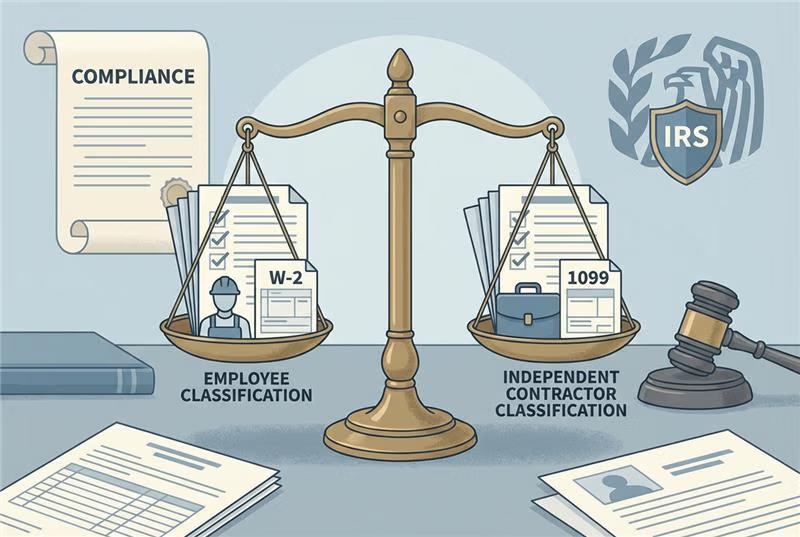
Correctly classifying workers as employees or independent contractors is critical for tax compliance and risk management. The IRS and state agencies rely on specific legal standards—not preference or cost savings—to determine proper classification.
What Is a W-2 Employee?
A W-2 is issued to employees. In this relationship:
- The employer controls how, when, and where the work is performed
- The employer withholds federal and state income taxes, Social Security, and Medicare
- The employer pays the employer portion of payroll taxes
- Employees may receive benefits such as health insurance, paid leave, and retirement plans
- Employers must comply with labor and employment laws
What Is a 1099 Independent Contractor?
A 1099-NEC is issued to independent contractors. In this arrangement:
- The worker controls how and when the work is performed
- No taxes are withheld by the payer
- Contractors pay their own self-employment taxes
- No employee benefits are provided
- Contractors typically operate independent businesses and may serve multiple clients
Choosing Between W-2 Employees and 1099 Contractors
Worker classification is based on legal standards, not business preference or cost considerations. Misclassification can result in IRS penalties, back taxes, interest, and potential wage and labor claims.
Key Factors Considered
- Level of control exercised by the business
- Degree of independence of the worker
- Nature and permanency of the working relationship
IRS Worker Classification Rules (Federal Standard)
The IRS applies the Common Law Test, which evaluates three main areas:
1. Behavioral Control
- Who controls how the work is performed?
- Are instructions, training, or supervision required?
More employer control generally indicates a W-2 employee.
2. Financial Control
- Who provides tools, equipment, and supplies?
- Is the worker paid hourly/salary or per project?
- Can the worker realize a profit or loss?
Greater financial independence supports 1099 contractor status.
3. Type of Relationship
- Is there a written contract?
- Are the benefits provided?
- Is the relationship ongoing or project-based?
- Is the work a key aspect of the business’s core operations?
Ongoing or core business work often points to W-2 employee classification.
ABC Rule (Used by Some States)
Certain states apply the stricter ABC Test. To qualify as an independent contractor, all three conditions must be met:
- Absence of Control
The worker is free from the company’s control in performing the work. - Business Is Unusual
The work is outside the usual course or location of the business. - Customarily Engaged
The worker is independentlyestablished in their own trade or business.
If any one of these conditions is not met, the worker must be classified as a W-2 employee.
Final Guidance from Sai CPA Services
Worker classification depends on the facts and circumstances of the relationship—not contracts, titles, or payment methods. Incorrect classification can trigger audits, penalties, and costly legal exposure.
If you are unsure how to classify your workers or want to review your current setup, Sai CPA Services can help ensure compliance and reduce risk.
Contact Sai CPA Services today for expert payroll and worker classification guidance.